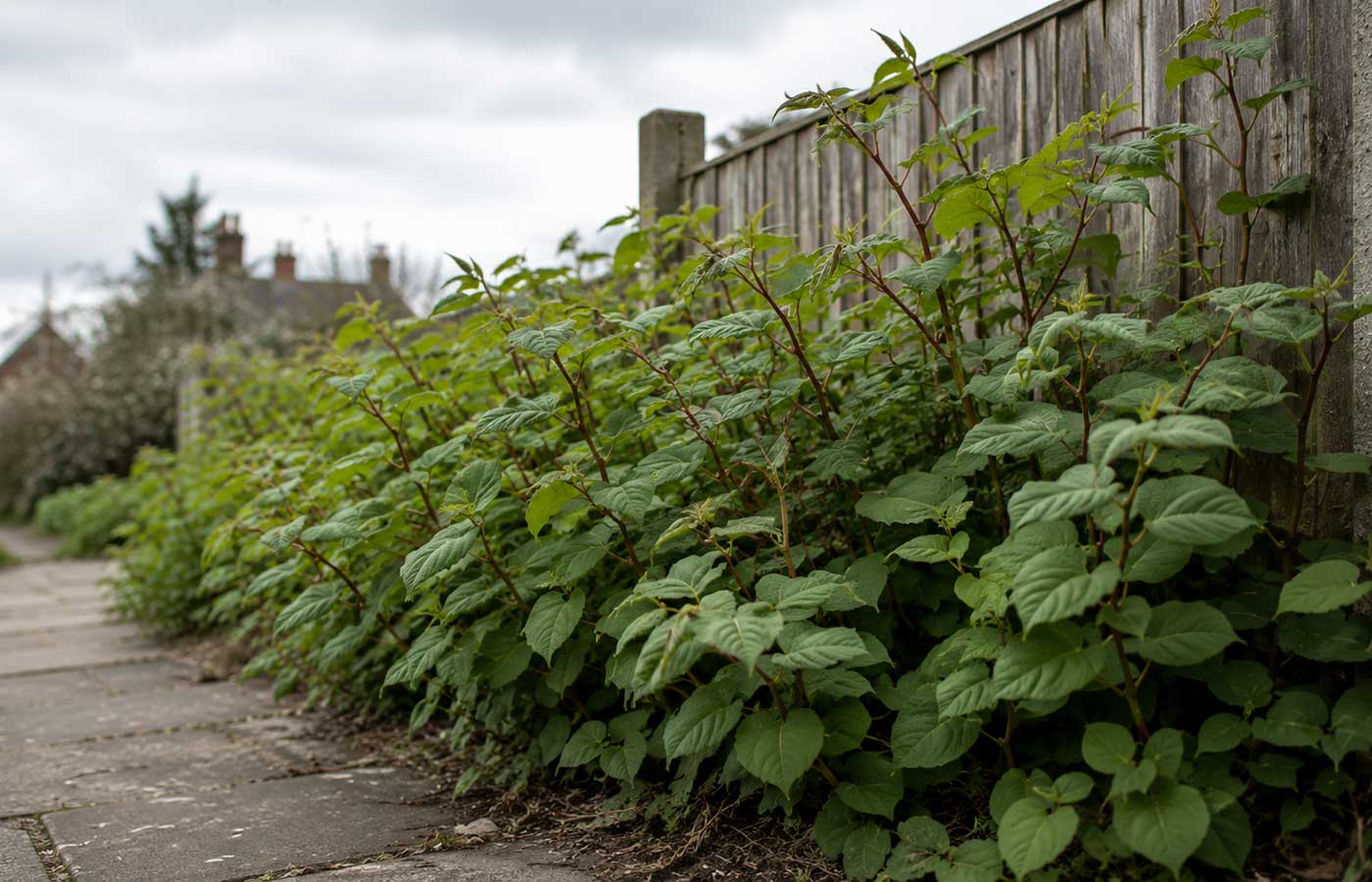
Japanese knotweed can look very different throughout the year
One reason Japanese knotweed is sometimes difficult to identify is that it changes appearance significantly between spring, summer, autumn and winter.
A plant photographed during April may look completely different by August. During winter, much of the visible growth dies back altogether, leaving dry hollow stems behind.
This changing appearance is one reason why many people compare several photographs before deciding whether a plant could be knotweed.
What knotweed often looks like in spring
Spring growth is often the stage that first attracts attention.
New shoots commonly emerge from the ground in clusters and are usually reddish or purple in colour. The shoots can appear thick, fleshy and upright, sometimes resembling asparagus tips or red bamboo shoots.
As temperatures rise, the plant may begin growing rapidly, particularly in sunny or disturbed areas of ground.
People often notice spring growth:
- Beside fences
- Near paving and paths
- Along garden boundaries
- Close to garages and sheds
- In neglected corners of gardens
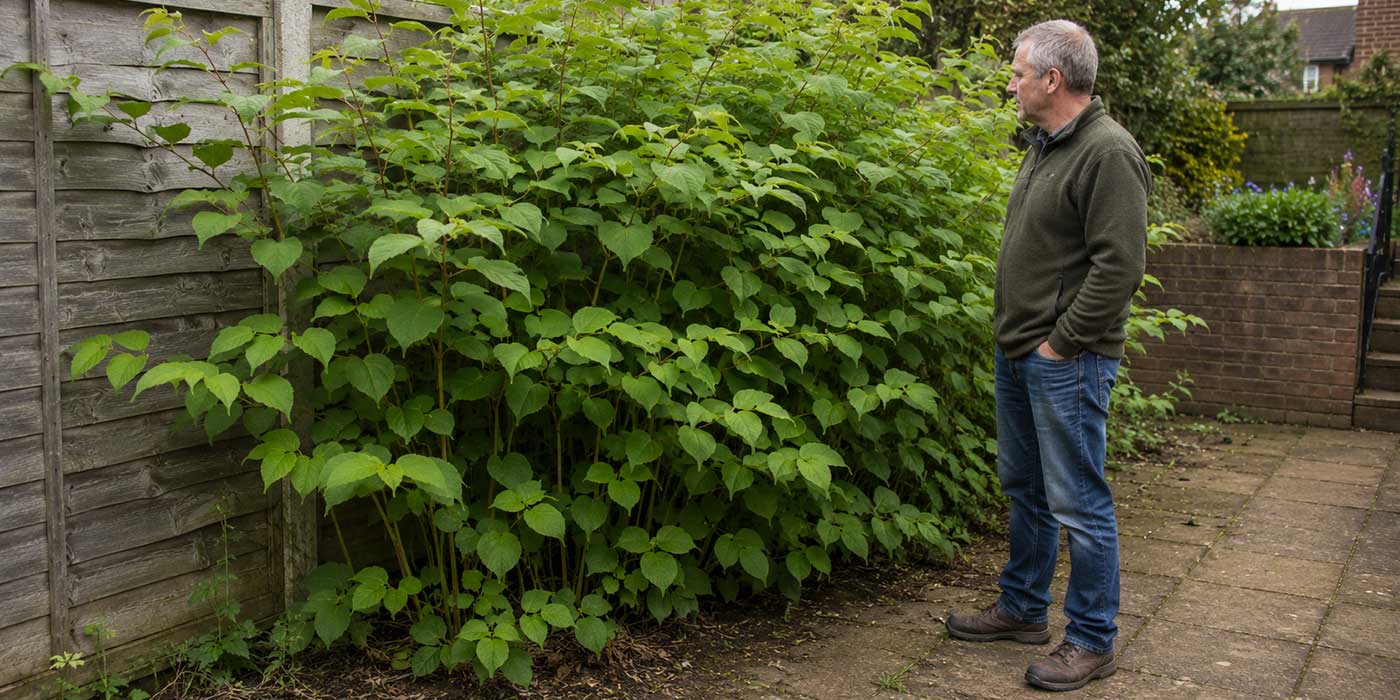
Summer knotweed growth is usually much taller
By summer, Japanese knotweed often becomes tall and dense.
The stems commonly resemble bamboo from a distance, although knotweed is not actually a bamboo plant. Mature stems are usually green with reddish or purple speckling.
Leaves are generally broad and green with a pointed tip and flat base. Established growth can become surprisingly thick during warmer months.
Large patches of dense vegetation are one of the reasons knotweed often stands out in residential areas.
Japanese knotweed flowers are small and pale
During late summer and early autumn, Japanese knotweed may produce clusters of small creamy-white flowers.
These flowers are often much less dramatic than people expect. They usually appear in delicate sprays spread across mature growth.
Flowering knotweed can sometimes look less threatening than earlier stages of growth, even though the plant itself may already be well established.
What knotweed looks like in winter
During winter, much of the green growth dies back.
Dry hollow canes often remain standing above ground level and may appear brittle or straw coloured. In some locations, these dead stems remain visible until fresh spring growth begins again.
Without leaves, winter knotweed can be harder to identify confidently, especially when viewed from photographs alone.
The growth pattern often gives useful clues
Many plants share individual features with Japanese knotweed, which is why identification based on one leaf or stem is often unreliable.
The overall growth pattern is usually more revealing.
Japanese knotweed commonly:
- Grows in dense clusters
- Returns from the same area each year
- Spreads along boundaries
- Appears in disturbed ground
- Forms upright cane-like growth
- Expands rapidly during warmer weather
Several plants are commonly mistaken for knotweed
A large number of UK plants can resemble Japanese knotweed at certain times of year.
Common examples include bamboo, bindweed, Russian vine, dogwood shoots and Himalayan balsam.
This is why photographs of the whole plant and surrounding area are normally more useful than close-up leaf photographs alone.
Photographs that often help identification
If you are trying to work out whether a plant may be knotweed, it usually helps to photograph:
- The whole plant from a distance
- Leaves and stems together
- Any new shoots
- The surrounding ground
- Nearby structures or paving
- The overall size and density of growth
Natural daylight images generally provide the clearest results.
Related pages
Unsure whether this is knotweed?
You can send a clear photograph for an initial review of the plant.