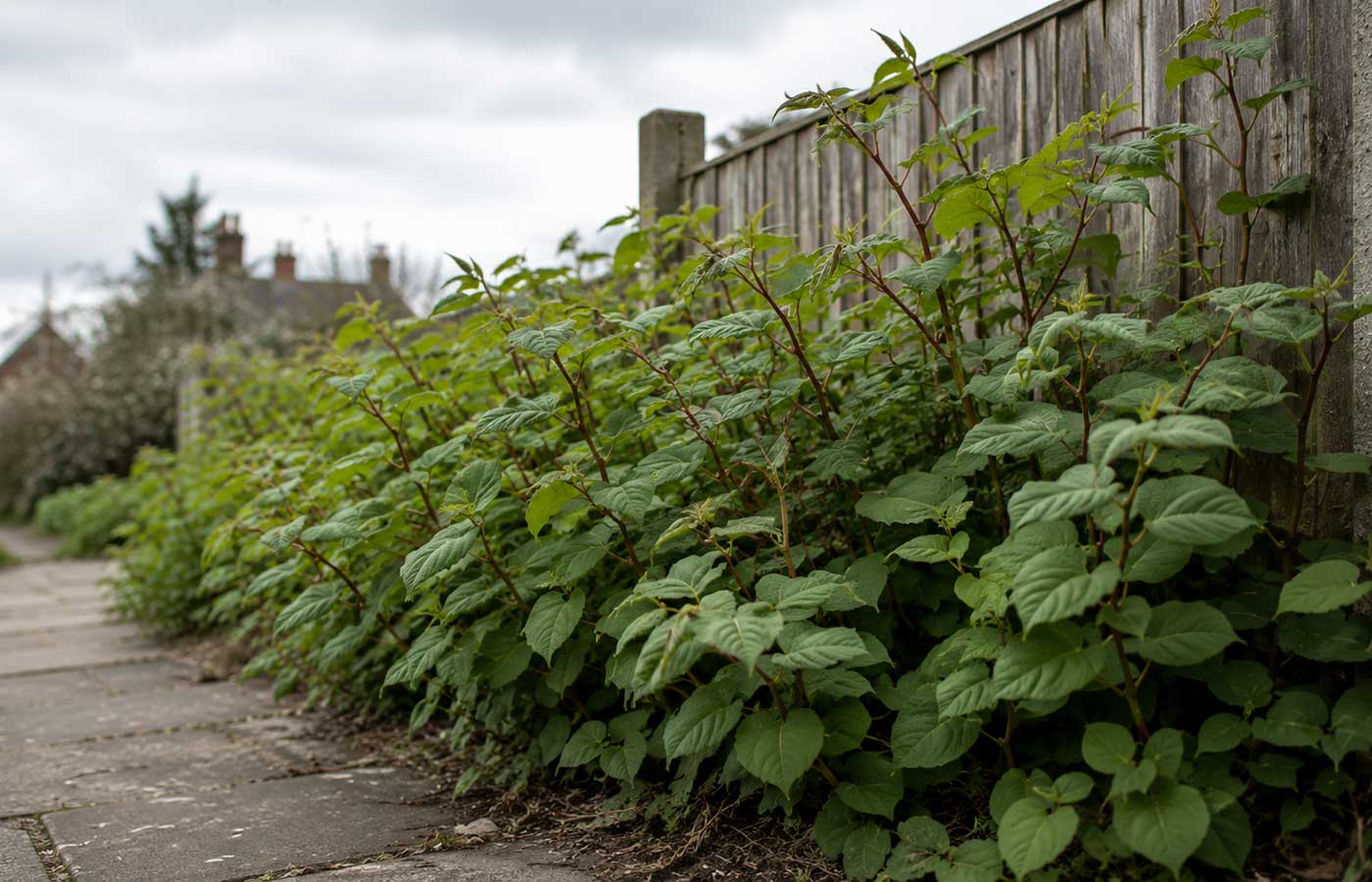
Bamboo and knotweed are commonly confused
One of the most common plant identification questions in the UK is whether suspicious growth is bamboo or Japanese knotweed.
The confusion is understandable because both plants can produce tall cane-like stems and rapid seasonal growth. From a distance, established knotweed can sometimes resemble a patch of bamboo, particularly during summer.
However, there are usually several noticeable differences once the plants are examined more closely.
Japanese knotweed is not actually a bamboo plant
Although mature knotweed stems are often described as bamboo-like, Japanese knotweed belongs to a completely different plant family.
The comparison mainly comes from the upright hollow stems that appear during warmer months.
In many gardens, people first suspect knotweed simply because the growth reminds them of bamboo canes.
The leaves are usually one of the clearest differences
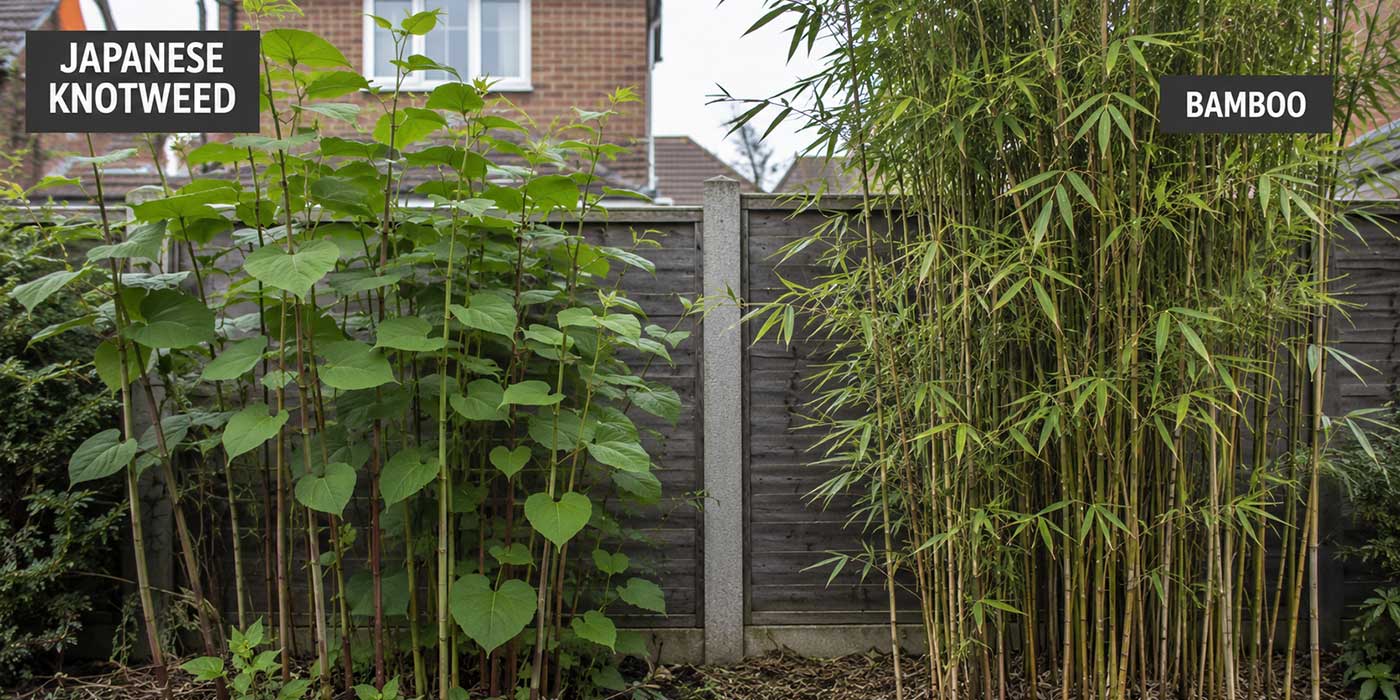
Leaf shape often provides one of the easiest ways to separate the two plants.
Japanese knotweed leaves are usually:
- Broad and flat
- Shield or heart shaped
- Bright green during summer
- Arranged in a zig-zag pattern along stems
Bamboo leaves are normally:
- Long and narrow
- Thin and grass-like
- More pointed in appearance
- Usually attached to finer branches
Even when the stems appear similar, the foliage often looks very different.
The stems can look similar from a distance
Both plants can produce upright segmented stems, which is one reason confusion is so common.
Japanese knotweed stems are often:
- Green with purple or reddish speckling
- Soft during active growth
- Hollow inside
- Seasonal above ground
Bamboo canes are usually:
- Harder and woodier
- More rigid
- Often greener or yellow in colour
- Long-lasting throughout the year
During winter, knotweed stems often die back completely, while bamboo normally remains standing and green.
Growth patterns are often very different
The overall growth habit usually provides useful clues.
Japanese knotweed commonly forms:
- Dense upright patches
- Fast seasonal growth
- Clusters of thick stems
- Large leafy vegetation during summer
Bamboo often creates:
- Taller cane structures
- Persistent evergreen screening
- More open spacing between canes
- Leafy branches higher up the stems
Established bamboo can also grow considerably taller than most residential knotweed growth.
Winter appearance can help separate them
Winter is often one of the easiest times to notice the difference between the two plants.
Japanese knotweed usually dies back after autumn, leaving dry hollow canes and dead vegetation above ground.
Bamboo normally stays alive and green throughout winter, with leaves remaining attached to the canes.
This seasonal difference is one of the clearest visual clues.
Spring shoots can still cause confusion
During spring, young bamboo shoots and knotweed shoots can appear surprisingly similar at first glance.
Both may emerge rapidly from the ground and sometimes display reddish colouring during early growth.
However, knotweed shoots often appear thicker and fleshier, while bamboo shoots generally become more rigid as they mature.
Bamboo is usually planted intentionally
Another clue sometimes comes from the surrounding garden layout.
Bamboo is commonly planted deliberately as screening or ornamental landscaping. It may appear in neat rows, containers or planned garden borders.
Japanese knotweed is more often found:
- In neglected areas
- Along boundaries
- Near disturbed ground
- Beside old structures
- Near railway land or embankments
Of course, location alone does not confirm identification, but it can help build a clearer picture.
Photographs that help distinguish bamboo from knotweed
If you are comparing suspicious growth, it usually helps to photograph:
- The full height of the plant
- The leaves and stems together
- Young shoots
- The base of the stems
- The surrounding area
- Any winter growth remaining
Whole-plant images are normally much more useful than close-up stem photographs alone.
Many suspected knotweed plants turn out to be bamboo
A large number of photographs sent for knotweed identification eventually turn out to show ordinary bamboo growth.
The cane-like stems naturally lead people to worry, particularly when the growth is spreading quickly near fences or buildings.
Looking at leaf shape, winter appearance and the overall structure of the plant usually provides a much clearer indication than focusing on stems alone.
Related pages
Could this be Japanese knotweed?
A clear photograph can often help identify common knotweed features.