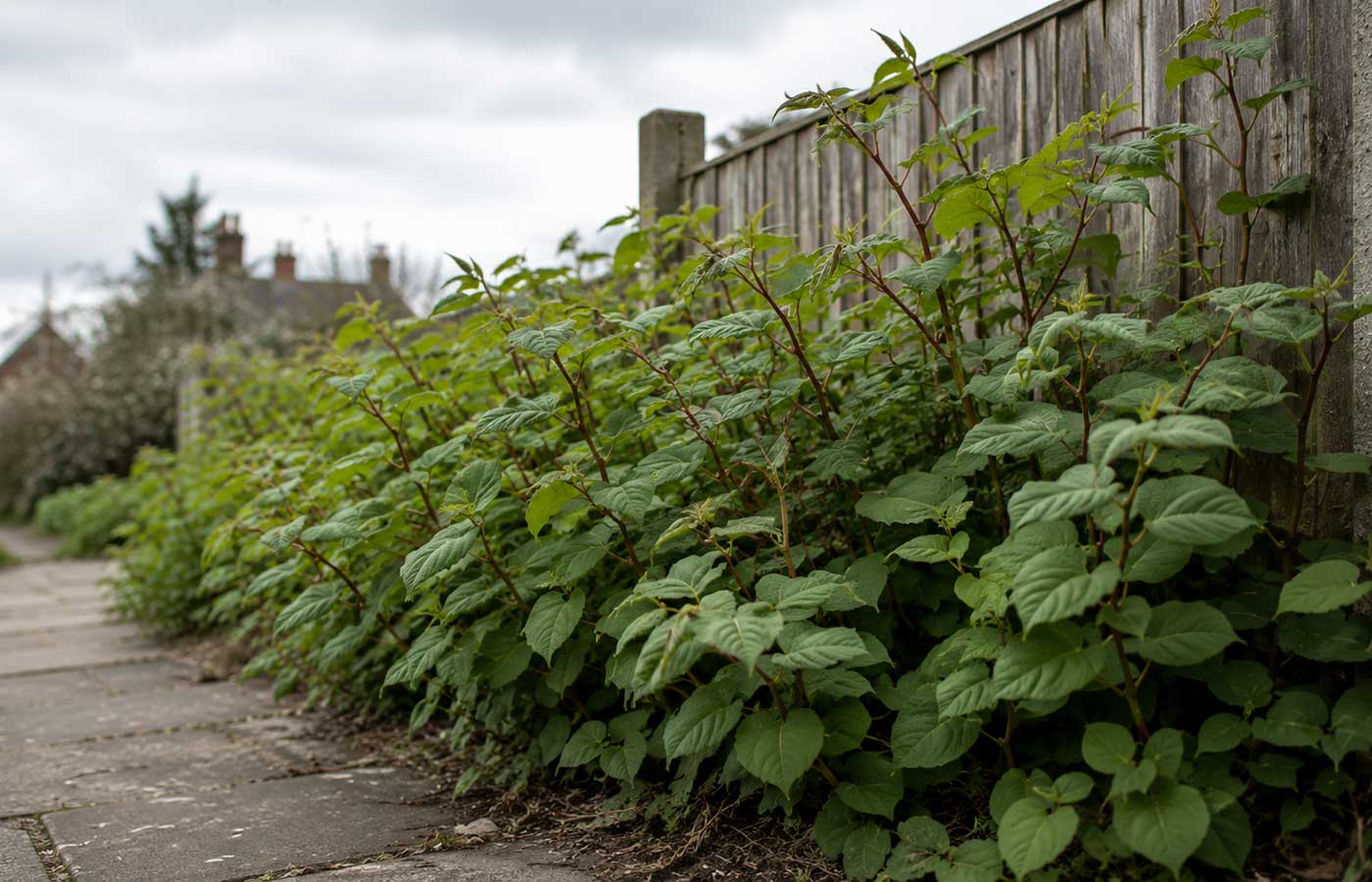
Winter knotweed can look very different from summer growth
Many people struggle to identify Japanese knotweed during winter because the plant changes appearance so dramatically after autumn.
By the colder months, most of the green foliage has died back completely. Dense summer growth disappears, leaving dry hollow stems and dead vegetation above ground.
For property owners who only associate knotweed with tall green summer growth, winter plants can sometimes look surprisingly unremarkable.
The underground rhizomes remain alive during winter
Although visible growth dies back, the underground rhizome system usually survives beneath the surface.
These rhizomes store energy throughout winter before producing fresh shoots again during spring. This is one reason why knotweed often reappears from the same area year after year.
The absence of green growth during winter does not necessarily mean the plant has disappeared permanently.
Winter stems are often dry and hollow
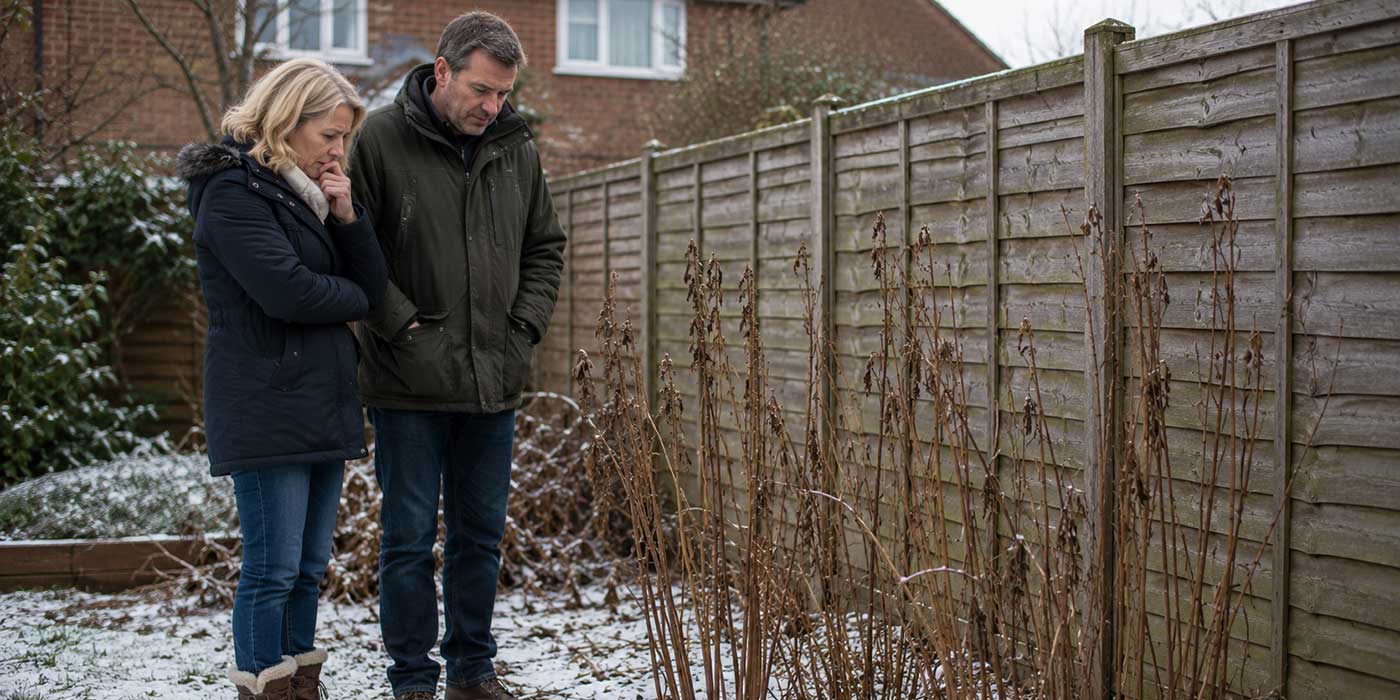
One of the most recognisable winter features is the presence of dry upright canes.
These stems are commonly:
- Light brown or straw coloured
- Hollow inside
- Brittle and dry
- Segmented like bamboo
- Standing upright after leaves have fallen
In some areas, these dead canes remain visible throughout the entire winter season.
Leaves usually disappear after autumn
During late autumn and early winter, the leaves normally die off and fall away.
Without the broad green foliage visible during summer, knotweed can become much harder to recognise confidently.
People sometimes mistake winter knotweed stems for ordinary dead garden growth, particularly in neglected areas or along old boundaries.
Winter knotweed is often noticed during property inspections
Many people first discover possible knotweed during winter while carrying out garden work, clearing vegetation or viewing property.
Common situations include:
- Garden clearance work
- Fence replacement
- Property surveys
- Winter pruning
- Building and landscaping work
- Mortgage inspections
Dead canes near paving, walls or drains often attract attention once surrounding vegetation has thinned out.
The location can still provide useful clues
Even during winter, the surrounding location often helps build a clearer picture.
Japanese knotweed is frequently found:
- Along garden boundaries
- Beside retaining walls
- Near garages and sheds
- Close to railway land
- Along streams and embankments
- In neglected areas of gardens
When dry canes appear repeatedly in these locations, people often begin comparing them with knotweed photographs online.
Winter knotweed is commonly mistaken for other plants
Several ordinary plants can resemble knotweed during winter once foliage has disappeared.
Bamboo is one of the most common sources of confusion because both plants can leave upright cane-like stems after growth dies back.
Dead perennial garden plants, old sunflower stems and overgrown shrubs are also sometimes mistaken for winter knotweed.
This is one reason why identification based purely on winter stems can sometimes be difficult.
Old growth may remain visible from previous seasons
In established areas, dead canes from earlier years sometimes remain mixed together with newer growth.
This can create thick areas of tangled dry stems close to fences, sheds or overgrown boundaries.
Even when fresh green growth is absent, these old canes can still indicate where knotweed has previously become established.
Winter can make garden boundaries easier to inspect
One advantage of winter is that reduced foliage often makes property boundaries easier to see clearly.
Dense summer vegetation that previously hid suspicious growth may no longer be present, making it easier to notice:
- Clusters of dry canes
- Old stem bases
- Repeated growth areas
- Vegetation emerging near structures
- Signs of previous cutting or treatment
Photographs that help identify winter knotweed
If you are trying to identify possible knotweed during winter, it often helps to photograph:
- The full area of growth
- Dry stems from close range
- The surrounding location
- Nearby walls, paving or drains
- Clusters of old canes
- Any surviving leaves or shoots
Photographs from earlier seasons can also help provide useful comparison.
Winter knotweed can appear less dramatic than summer growth
Many people are surprised by how ordinary Japanese knotweed can appear during winter.
Without the dense green foliage seen during summer, the plant may initially resemble dead garden vegetation or old bamboo stems.
However, repeated clusters of hollow canes returning from the same location each year often lead people to investigate further.
Related pages
Still trying to identify the plant?
Photographs of the stems, leaves and surrounding area can help with an initial assessment.