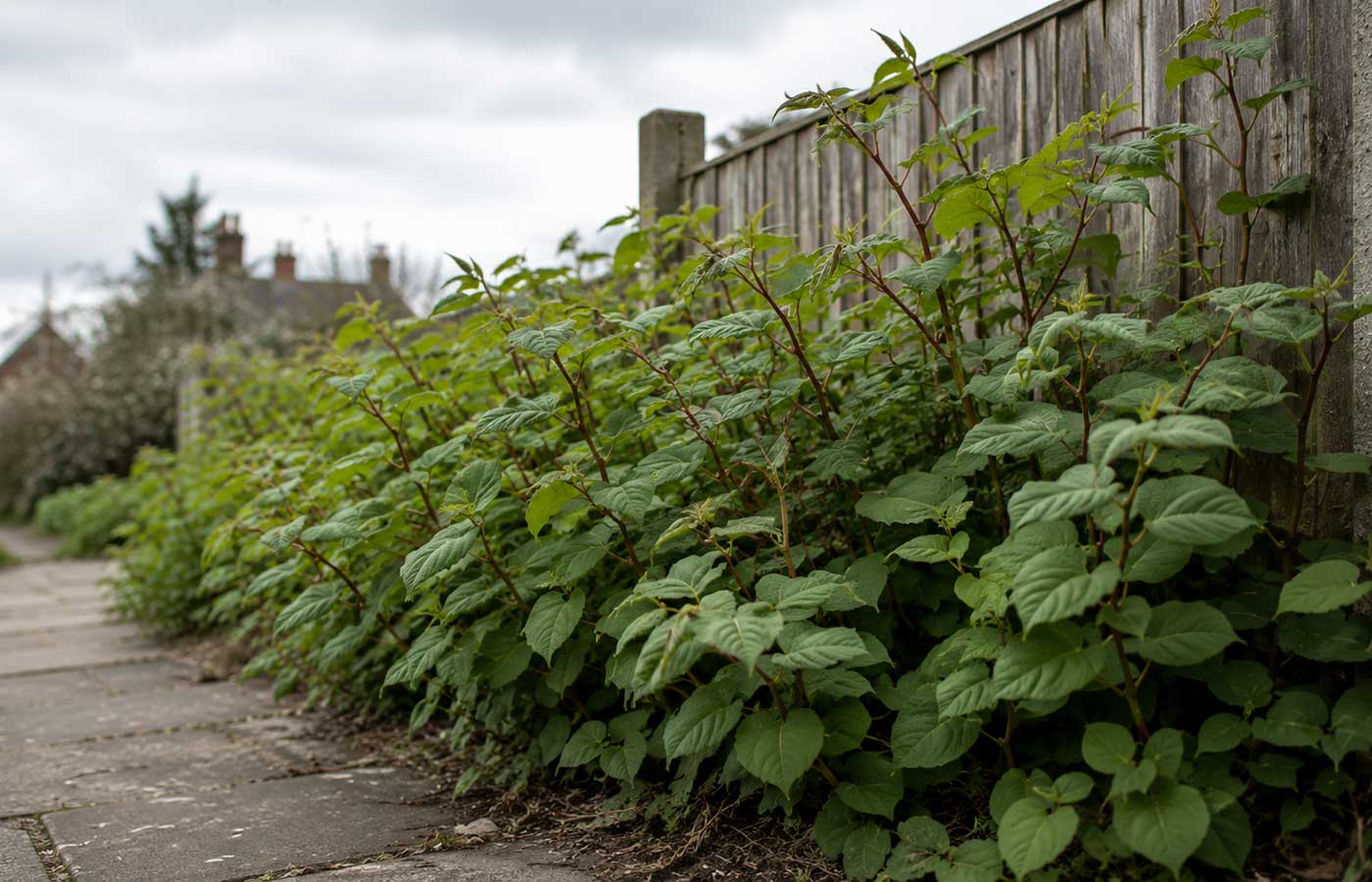
Finding suspicious growth can feel alarming
Many people first start researching Japanese knotweed after noticing unusual growth near their property.
The concern is understandable. Knotweed receives a great deal of publicity in the UK and is often associated with property problems, surveys and mortgage questions.
In many situations, however, the plant people discover eventually turns out not to be Japanese knotweed at all.
Even so, it is sensible to investigate suspicious growth properly rather than ignoring it completely.
Why knotweed causes concern for property owners
Japanese knotweed is mainly known for its strong underground rhizome system and rapid seasonal growth.
People often become worried when the plant appears close to:
- Buildings
- Garden walls
- Paving and patios
- Drains and inspection covers
- Driveways
- Boundary fences
The possibility of future spread is usually what causes most concern rather than the visible stems alone.
The appearance of the plant can change through the year
One reason knotweed can be difficult to assess is that it looks very different depending on the season.
Spring often brings reddish shoots emerging from the ground, while summer growth may become tall, dense and leafy.
By winter, the plant can die back completely above ground, leaving dry hollow canes behind.
Because of these seasonal changes, people sometimes discover suspicious growth long after it first became established.
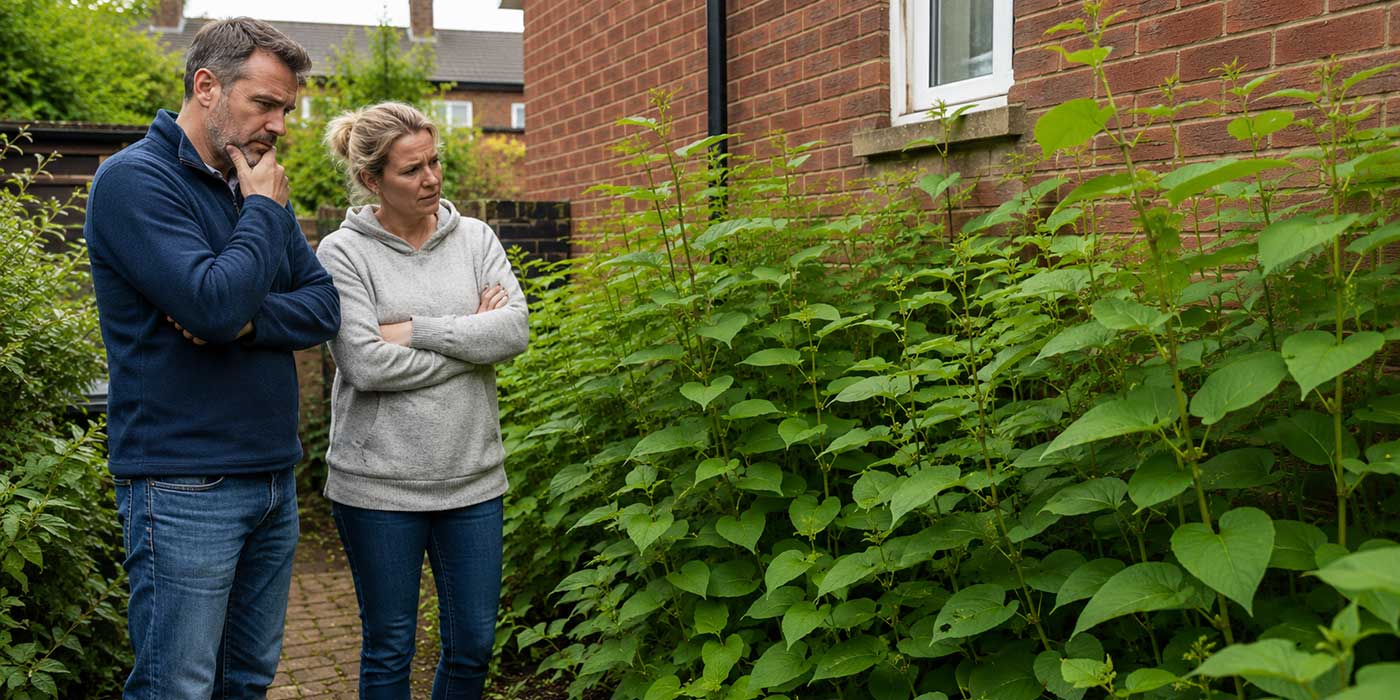
Many ordinary plants are mistaken for knotweed
A large number of identification concerns eventually involve ordinary garden plants rather than Japanese knotweed itself.
Plants commonly confused with knotweed include:
- Bamboo
- Dogwood
- Bindweed
- Lilac shoots
- Peonies
- Himalayan balsam
Fast-growing stems or reddish shoots are often enough to trigger concern, particularly near buildings or boundaries.
People often worry about structural damage
One of the biggest fears surrounding knotweed is whether it may damage buildings or hard surfaces.
Most concerns usually involve:
- Paving movement
- Cracks near walls
- Garden structures
- Retaining walls
- Drainage areas
- Boundary structures
In many situations, suspicious cracks or movement may already have existed before the plant appeared nearby.
Even so, growth close to structures understandably attracts attention and caution.
Property sales and mortgages can become a concern
People often begin researching knotweed after preparing to sell, buy or remortgage a property.
Surveyors sometimes flag suspicious growth during inspections, particularly when dense vegetation appears near structures or boundaries.
This can lead homeowners to seek further identification or professional advice before proceeding.
The uncertainty itself is often what causes most stress for buyers and sellers.
Neighbours sometimes become involved
Because knotweed can spread across boundaries, neighbouring properties occasionally become part of the discussion.
People may become concerned if suspicious growth appears:
- Along shared fencing
- Near adjoining gardens
- Beside access paths
- Close to garages or outbuildings
In many cases, uncertainty over identification is what first creates tension rather than confirmed knotweed itself.
Not every suspicious plant is an emergency
Discovering unusual growth near a property can feel worrying, particularly after reading dramatic online information.
However, not every suspicious plant automatically represents a serious problem.
Many people initially assume the worst after spotting bamboo-like stems or red shoots, only to discover the plant is something much more ordinary.
Taking clear photographs and comparing several features usually provides a calmer and more reliable starting point.
Photographs can often help provide initial clues
If you are trying to understand whether a plant may be knotweed, it usually helps to photograph:
- The full area of growth
- Leaves and stems together
- The surrounding location
- Nearby paving or structures
- Young shoots
- Any flowers present
Whole-plant photographs in natural daylight are normally much more useful than extreme close-ups.
Location alone does not confirm knotweed
People sometimes assume that any fast-growing plant near walls or paving must be Japanese knotweed.
In reality, many ordinary plants grow close to structures without being knotweed at all.
The overall growth pattern, leaf shape, stem structure and seasonal behaviour usually provide far more reliable clues than location alone.
Most concerns begin with uncertainty
For many homeowners, the biggest issue is simply not knowing what the plant actually is.
Because Japanese knotweed is so widely discussed online, even harmless garden growth can quickly become a source of anxiety.
Careful comparison, clear photographs and looking at the whole plant rather than a single stem usually helps create a clearer picture.
Related pages
Think you may have knotweed?
An initial review of clear photographs may help identify common signs.